Thursday, 10 September 2009

civil war

Terrible news. The winged kingdom is riven, Roundheads and Cavaliers style, by warring factions. Namely, birds v. bats. It's not good to take sides, and Things with Wings would like to state that it likes birds and bats entirely equally, but if we are going to point the finger of blame, it must surely be at the great tits who, unprovoked, are biting the heads off pipistrelle bats.

Picture the scene. A dark cave, somewhere in the Bukk Mountains of Hungary. A colony of hibernating pipistrelle bats, each weighing no more than 5 grams. As spring draws closer, the first bat wakes from his long sleep. He is cold, weak and exhausted and quite unable to fight off the great tit who SWOOPS into the cave and rips off his head. Just like that.

Greater detail comes from bat ecologist Bjorn Siemers, who notes that "the birds don't kill the bats before they start eating them but the bats eventually die when the birds peck open their brain case."

I will not post a picture of a headless pipistrelle because I do not wish to upset you. Having seen it myself is quite enough.

In defence of the great tits (never let it be said that we are not fair and even-handed in every way) food can get pretty scarce in the Hungarian winters.

Thanks to newscientist.com for bringing this to our attention. We will of course report any further BATtles in full.

Monday, 25 May 2009

Oh no!


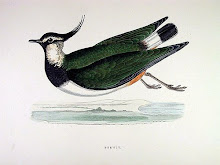
Sobering stuff. Our British birds are going going about to be gone, and then no more will we hear the skylark's 'profuse strains of unpremeditated art', or see the yellowhammer perched in a hedge, brightening the countryside and probably your day with its attractive colour. 17 other avian species inhabiting the British countryside are also at risk, including the lapwing and the kestrel.

If you need cheering up after reading this, I bet there are some gawky goslings in a river near YOU that would be delighted to have you pay a visit. Especially if you came bearing bread.

Saturday, 16 May 2009

Bird of Third, TT09

There is no doubting that the hoopoe is an exceptionally fine bird. In a way, he combines many creatures in a single form. To wit (to woo): he has zebra-like wings, a vaguely lion-like mane/crest and a beak sort of reminiscent of an anteater's snout, with which he does indeed extract ants from the ground. Like many a human, he likes to sunbathe, which he does by spreading out his wings on the ground and tilting his head back. However, this does not result in a tan.

The hoopoe's name derives from his 'oop-oop-oop' call. Humans have traditionally had mixed feelings about this particular bird. To much of Europe they were thieves and to Scandinavians they were harbingers of war, while it is very possible that King Tereus of Thrace, who raped his wife's sister Philomela, was turned into a hoopoe as a punishment (please see Ovid's Metamorphoses for further details). On a more positive note, a non-bird-loving close relation of TWW recently saw a hoopoe in Italy and was so taken with him that she rushed out to buy an ornithology book in order to learn more. Plus: in Ancient Egypt they were sacred, in Persia they were a symbol of virtue, and in Israel the hoopoe has recently been chosen as national bird.

Sunday, 26 April 2009

Bird of 1st Week, Trinity Term 2009


Welcome, Trinity Term 2009. And welcome, long-tailed shrike, chosen bird of first week. Only once have you set claw in the British Isles, and that was in November 2000. We'd like it if you came back because you have a nice peachy coloured body and pearl grey head, not to mention a black mask extending from the forehead across the eyes and to the ear coverts.


Welcome also, followers of the TWW blog. If YOU would like to see the long-tailed shrike, you must follow the law of Mohammed and the mountain and go to South or South-East Asia, where it can be found perched on bushes from Kazakhstan to New Guinea. Perhaps you could woo it with a tasty lizard, insect, small bird or rodent. However, it needs no human help and is quite able to fend for itself: the shrike is skilled at impaling its prey on a thorn or some such sharp point, and then ripping it apart with its strong hooked bill. Yum.


The flight of the long-tailed shrike is undulating, but do not be deceived, for its dash is straight and determined. We do like a bird of resolve.


Thursday, 9 April 2009

DID YOU KNOW...

... that an owl has his ears at different heights so that he can catch a whole range of sounds?

red letter day


i.e. once again, the BBC takes great interest in the kingdom of bird.

or rather

TWICE again, because:


1. this morning, Radio 4's frequently excellent and informative Woman's Hour ran a feature about female falconers, who have borrowed this sport from medieval princes and, along with Hawkforce UK, are dragging it into the modern age. Have a listen:


2. this evening, BBC 1's The One Show - which I actually dislike extremely - discussed how the technology and structure of an owl's wings, which allow him to fly silently, can be used to make aeroplanes quieter. Planes can also learn a thing or two from the angle of an owl's landing (25 degrees). This means that the owl can catch eg a vole before the vole has noticed a thing. Not that an aeroplane would be catching a vole, of course, but this steep angle means that the owl stays far away from the vole for as long as possible, and in a similar manner, the plane could stay away from the houses below and therefore not disturb them so much.

They also had a real live barn owl on the show. Don't get too excited though because the owl was called Barney, which is crashingly unimaginative. Worse still, he was quite boring and refused to turn his head 360 degrees. (A finer show than The One Show would not have stood for it, that's for sure.)

Wednesday, 25 March 2009

An owly rump, a rumpy owl

Now you can add one more to your stock of bird phrases (birds of a feather flock together, don't count your chickens, a bird in the hand, the early bird catches the worm, one swallow does not a summer make, what's good for the goose etc. etc.)

'A NEVER DAY WHEN THE OWL BARES ITS RUMP'

which means that it (whatever it is) is absolutely never no way going to happen.

Thank you, distinguished Russian literary theorist Mr Roman Jakobson, for bringing this one to our attention.