Wednesday, 25 March 2009

You can breathe easily now


... because the results of the RSPB Garden Birdwatch Survey are finally in.


Here are Britain's ten most-seen birds:

1. House sparrow
2. Starling
3. Blackbird
4. Blue tit
5. Chaffinch
6. Woodpigeon
7. Collared Dove
8. Great tit
9. Robin
10. Long-tailed tit

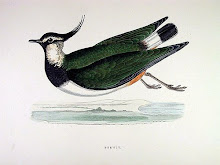
Long-tailed tits are a shock entry, propelled for the first time into the Top Ten as a result of their sociable nature and diminutive stature. You see, they have only recently discovered the nutritional possibilities of garden feeders, and because they are very small and like to eat together, whole families can dine together at a single bird table. They also look quite lovely, as the picture above makes clear, and we warmly welcome their success.

For more news on the Birdwatch results, take a look at http://www.rspb.org.uk/birdwatch/results/

Thursday, 19 March 2009

Look! Listen!

Birdwatching and good music: like peanut butter and jam, Poirot and his moustache, a window seat and a nice book or indeed any other happy and natural pairing. Find out more at:

http://www.guardian.co.uk/music/2009/mar/13/elbow-doves-birdwatching-pop-music


You only have six days left to click on the link below and listen to a BIRD MYSTERY featuring nature detective Tom Heap investigating who or what is responsible for the suspicious disapperance of the cockney sparrow. Or 'sparrer', as Radio 4 would have it.

http://www.bbc.co.uk/programmes/b00j4hk8

Wednesday, 25 February 2009

Bird of 6th Week, HT09

You may have noticed that Bird of the Week has been absent for a while. This is because when it grows cold, all sensible birds take a trip south to do the avian equivalent of sunning themselves on lilos whilst drinking fruity cocktails. But now, as the first rays of spring sunshine warm the earth and every day brings us closer to daffodil season, bird of the week is BACK. And he's bigger than ever. In fact, he's very big indeed, for our bird of 6th week is the OSPREY, and he has a wingspan of 4.5-6 feet (135-180cm, for those of you that prefer metric). Don't mess with him.


He can be found in all continents apart from Antarctica, but he needs to be near water so that he can eat fish. His black eye-patch gives him a piratical air, and sometimes he goes by the name of Sea Hawk. The female is somewhat larger than the male and has an attractive black necklace (figuratively speaking). Ospreys generally pair for life but if the union is unsuccessful, there will be what ornotholigists and anthropomorphosis-loving folk call "a divorce". It is uncertain whether divorced ospreys then "marry" again. But regardless of marital difficulties, osprey chicks have a very happy childhood, and their nests have been known to contain hula-hoops, ragdolls and toy boats.
N.B. This last bit is not even a lie.

Sunday, 15 February 2009

well take a look at this


If you go down to the meadows today...

...you can't be sure of anything really, but if you are very lucky you might see what we have seen which is:


1. A HERON (pictured above)

stalking through the undergrowth, disregarding the excited gaze of those who look upon him.


2. a pair of swans (pictured further above)

for a melancholy view of the mating habits of swans, the transience of life and the loneliness of man, take a look at W.B. Yeats' 'Wild Swans at Coole'.


3. a kingfisher (again)


and WHO KNOWS WHAT ELSE?

Christchurch Meadows: full of surprises. and birds.

Thursday, 22 January 2009

FRUITS AND NUTS AND SEEDS


This term we are bringing the bird mixtape to the masses and offering you the chance to make or receive, or make AND receive, a mix cd filled with songs about birds.

If this is the first you have heard of the bird mix, you are not on our mailing list. This for a start is bad and wrong. Email us at madaboutthebird@gmail.com and we will put it right. Furthermore we will supply you with all the mix details so that you will not be left out in the cold.

But the deadline by which all mixes must be made is FRIDAY 2ND WEEK (30th January) so you must be quick. Hurry! Hurry!

LEADERS OF THE PACK

Are we ahead of the crowd or are we ahead of the crowd?
There is only one answer to that question and it is YES.

For on page 12 in yesterdy's G2 was an article entitled 'FEATHER YOUR NEST', announcing to the world that birds are the very last word in fashionable design, and showing a selection of cushions, candles, rugs, coat hangers, earrings etc. etc. that are all BIRD BIRD BIRD. Here is a shortened version of that article:

http://www.guardian.co.uk/lifeandstyle/gallery/2009/jan/22/birds-interior-design-homes?picture=342130660

but the real one is much better.

Keep your beady eyes open also for the Observer this Sunday, which will feature a guide to the Top 50 British Birds.

Wednesday, 14 January 2009

Bird of 0th Week, HT09


THE WAGTAIL

In my official capacity as ambassador for the bird world, of course I like every bird absolutely equally. But when I am off-duty, and as a flawed and sadly partial human being, my warmest feelings are reserved for the wagtail.

The best thing about wagtails is the way that they run. This is hard to describe but if you have not seen it for yourself imagine a swift loping motion that manages to be graceful and comical at the same time. When they run their tails wag up and down and this too is funny to watch. Their tails wag pretty much all the time, actually. Perhaps this makes them the dog of the bird kingdom.

http://uk.youtube.com/watch?v=l7u4nsUKppM

There are several sort of wagtails. The most common to Britain is the PIED WAGTAIL, and this is lucky for us because he is also the most handsome and lovable. Arguably. However, the yellow wagtail and the grey wagtail are nice too.

I am finding it quite difficult to gather ACTUAL, SCIENTIFIC information on the wagtail, for two main reasons.
1. The different species of wagtail provide a 'taxonomical nightmare' from which many an unhappy ornithologist has yet to awake.
2. The writers of wagtail information are so overcome by the wagging tail that they fail to mention anything else.

In Oxford, wagtails sometimes hang out in Radcliffe Square, on Holywell Street or in Exeter's quad.