Thursday, 14 October 2010

foxy

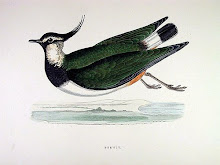
Now, if there's one thing we like almost as much as birds, it's foxes.* So imagine our utter joy - and also confusion and a bit freaked-outness - when we stumbled across THIS while googling 'bird and fox in victorian costume':


*Just so we're all clear, this isn't to say that foxes are our favourite things after birds. There are lots of things we like almost as much as we like birds, but if we had to make a list of our 100 favourite things (maybe not including books or foodstuffs), foxes would definitely be up there.

Thursday, 16 September 2010

Like-minded Lovers


Look!

http://www.edwyncollins.com/

What a guy. Did we already mention how when he was recovering from a cerebral haemorrhage, he drew a new bird EVERY DAY to maintain his coordination?

In the words of a TWW veteran,
"It's like in his heart there is no difference between birds and music."

Sigh. Coo.

Tuesday, 9 February 2010

EVERY DAY THIS WEEK

Five fifteen minute programmes on woodland birds.
Here's your chance to learn more about the chiff chaff, the willow warbler, the garden warbler and the black cap. And who knows what else?
You'd be a bird-brain to miss them.

http://www.bbc.co.uk/programmes/b00bvbzy

Friday, 22 January 2010

Two I made earlier

When I'm not thinking about birds, I'm usually thinking about cryptic crosswords. Sometimes I combine the two and attempt to make up crossword clues about birds. Such as:

1. Songbird allowed around tavern (6)

and

2. Girl astride water-bird (5)

Answers in an email to madaboutthebird@gmail.com and if they are correct we will give you a prize. If you happen to have any more bird-themed clues, please send them our way and perhaps one day t.w.w. will combine all the clues and make a proper bird crossword. This is my lifelong ambition but I fully expect it to be a decade or more before it comes to fruition, so don't hold your breath.

Wednesday, 30 December 2009


Radio 4 finishes off the year in cracking avian style with a programme about erstwhile t.w.w. bird of the week THE OSPREY. He's iconic, dontcha know. Listen here:


or on the radio itself if you happen to see this post before 11.30pm on 30th December 2009.

Monday, 14 December 2009

Bird Fact of the Day


At any one point in time, there are twice as many chickens alive as humans.

Sunday, 25 October 2009

Unpunctual bird of 2nd week, MT09

T.W.W. is lucky enough to own the the mug pictured to the right, which it bought from Age Concern on St. Clements for 75p. ‘What a bargain!’ said the man working in the shop, and T.W.W. very much agrees, partly because the mug is:

1. of a birdy nature
2. quite aesthetically pleasing
3. an adequate drinking vessel (although curiously heavy)
4. decorated with a reasonably accurate picture of a CHAFFINCH, our belated bird of 2nd week

but ALSO because it is informative and educational, for on the back of the mug is a little paragraph about the aforementioned chaffinch, along with a picture of some chaffinch eggs. This is what it says:

CHAFFINCH (Fringilla Coalebs)

A small seed eating bird with a short cone shaped bill with cutting edges, sometimes toothed, to assist in crushing their food.
They build open nests in trees or bushes and lay four to six spotted eggs. The brightness of the plumage of most males is enhanced towards the breeding season by the wearing down of the soberly coloured tips and edges of the feathers.

When was the last time you met a mug this knowledgeable? Bargain indeed.

Monday, 12 October 2009

Bird of 1st Week, MT09


Always remembering to keep one eye on the grouse, let us swivel the other eye, owl-style, to focus on the chosen bird of 1st week. As promised in our recent email, we are continuing with the Kiwi theme (though not the kiwi theme. maybe another time) and celebrating THE LAUGHING OWL, who has been even less successful than the kakapo at weathering the storms of colonisation.

The fate of the laughing owl is, I am afraid, no laughing matter, for he is now almost certainly extinct. A small grain of hope remains as a result of reports by a group of American tourists who, while camping in the wilds of New Zealand, heard what they took to be 'the sound of a madman laughing' which is indeed the sort of sound that a laughing owl makes. However, this was in 1985 so whatever laughing owl was or was not heard back then, it's probably dead now.

Other descriptions of the laughing owl's call include 'a peculiar barking noise ... just like the barking of a young dog', 'precisely the same as two men "cooeying" to each other from a distance' and 'a melancholy hooting note'. A correspondent from 1905 suggested that laughing owls might be attracted by the music of an accordian, which bears some resemblance to the owl's call. Whether this actually worked during the days of live laughing owls is in doubt; we can only assume that now, even the most skilfully-played accordian will not be skilful enough to summon the laughing owl out of extinction. You are welcome to try though.

Saturday, 10 October 2009

THE GROUSE IS DEAD, LONG LIVE THE GROUSE


Things with Wings is currently running The Alternative Grouse Season, handily timed to coincide with the actual grouse season (12th August-10th December). This is because we prefer our grouse alive and well rather than dead and shot.


What The Alternative Grouse Season (A.G.S.) means is that all term the grouse will be King Bird. What 'King Bird' means is as yet unclear. If we find out, we will let you know. If you find out first, you let us know. It's a deal.


What we DO know is that T.W.W. will be making an extra special effort to champion the grouse in all his (living) forms. Soon we will have a grouse poster campaign and we might also do some grouse modelling, painting and drawing (details to follow - we hope you will join in). At least one T.W.W. member is very keen to knit a grouse - if anyone knows where a grouse knitting pattern can be obtained, please get in touch. All this will of course be accompanied by Famous Grouse whiskey, the official drink of the A.G.S.


If you are particularly keen on or knowledgeable about the grouse, you can apply to be our special T.W.W.A.G.S. representative/events co-ordinator, or "grouse-master". Otherwise, you can get involved with The Alternative Grouse Season by telling us all your grouse facts and news, looking out for grouse around the house (town), spreading the grouse word and, most importantly, offering sanctuary to any grouse who comes pecking at your door. In the meantime, let's all put our shotguns away and raise a glass of Famous Grouse to the famous grouse.

Tuesday, 6 October 2009

well hello there


WE ARE THINGS WITH WINGS

We like birds, we like people who like birds.

This might mean that we will like you. This might mean that you will like us.

Things with Wings is an Oxford-based society designed to celebrate all things winged. Primarily, this means birds, but we also include creatures such as bats (we like bats a lot), moths and ladybirds. We're not so keen on butterflies so if that's your thing, you might want to look elsewhere.

If you're not in Oxford you are still welcome to be a part of T.W.W., for we are very much an international society with wings all over the place.

In addition to this blog, which will keep you up to date on all things bird, we also send emails and organise bird-themed events and bird-themed mixtape swaps and so on and so forth. So get in touch.

You can do this by emailing madaboutthebird@gmail.com and then we will put you on our mailing list. You can also join our facebook group at http://www.facebook.com/profile.php?id=506948963&v=info&ref=profile#/group.php?gid=23805883585. We would love to hear from you in multiple media (multimedia?) so please do both and, if you like, you can request our postal address and then send us a letter by pigeon post or, if you are not in Oxford, by human post. Then we'll send you one back.

Bird of 0th, MT09


A whole new year, a whole new bird.

Actually not a new bird at all but a very old and very endangered bird, the kakapo of New Zealand. The kakapo became the kakapo 70 million years ago when there were no mammalian predators in New Zealand and so it soon forgot how to fly. This turned out to be a big mistake, as the colonisation of N.Z. resulted in the introduction of cats, rats and stoats, none of whom are averse to snacking on a kakapo. Now the kakapo is a critically endangered species and in April 2009, students of the kakapo could only count 125 living individuals. Happily, humans are doing a lot to save this fine bird and so we hope that things will improve.

The kakapo is round and kind of fat and has a distinctive smell that has been described as a 'pleasant musty odour'. He has an owlish face and so, with impeccable logic, early European settlers called him the 'owl parrot'. (Things with Wings likes this double-barrelled approach to naming birds.) If you click on the link below you will see Stephen Fry meeting the kakapo and reflecting that he looks like a Victorian gentleman (the kakapo, not Stephen Fry. although now we come to think of it...). If this is true - and we think that it is - perhaps we must come to the sad conclusion that, like all Victorian gentleman, it is simply that the kakapo's day is drawing to a close and his time is nearly up.

Another reason, and indeed a much better reason, to watch the clip posted below, is that you will get to see a kakapo attempting to mate with a human's head.


Thank you, Laura Coleman, for alerting us to this noble bird and this curious spectacle.
On that note, we would like to remind all our readers that Things with Wings relies very much on its members' help in drawing our attention to matters bird. Of course we are always on the lookout but there is so much going on in the world of bird that we really cannot keep up to date without your help.

some birds and some words

Browsing in a bookshop today, Things with Wings just happened to stumble across a book called

THE POETRY OF BIRDS

edited by Simon Armitage (who loves birds, apparently) and Tim Dee (who probably likes birds too)

The title is a little bit misleading because one might think that this is a collection of poetry BY birds. Unfortunately, it is not. It is, however, the next best thing i.e. a whole lot of poems ABOUT birds.

The poems contained therein are arranged not by author or by title but alphabetically by bird, so that if you have a burning desire to read a poem about, say, a wagtail -and frankly, who doesn't? - you can just go to 'w' and there, right between 'wren' and some other alphabetically similar bird that T.W.W. can't quite remember, you will find 'Wagtail and Baby' by Thomas Hardy. Which is really great.

(When you consider 'The Poetry of Birds' and then think about how Simon Armitage recently made a documentary where he followed in the footsteps of Sir Gawain and generally spent an hour talking about how amazing 'Sir Gawain and the Green Knight' is, you will see it is as if S. Armitage is on a campaign to win T.W.W.'s heart. We will tell you now, Mr Armitage, that it is very much working.)

a wing and a song

or: why listen to The Beatles when you can listen to the beetles?

http://www.bbc.co.uk/programmes/b00n0wyw

(for that matter, why have Buddy Holly when you can have the crickets?)

WARNING: not all the insects featured have wings. only you know whether this is something you can handle.

WARNING 2: as always with the BBC, you have a limited time to listen. in this case, it is 8 days, so you had better hurry and catch it before it flies away.

Wednesday, 30 September 2009

Squirrel + bird = ?


A strange and unsettling thing happened yesterday. I was walking through a park listening to music when, in the very gap between one song and the next, I heard a curious sound along the lines of 'chook...weeeeeeeeee'. Looking around for an unfamiliar wing, I stepped off the path and into the surrounding woodland. Some bluetits were hanging out on a branch in their upside down bluetit way, but I know what bluetits sound like, and it sure isn't 'chook...weeeeeeeeeeeee'. The only other animate creature I could see was a squirrel. I glared at him in a friendly sort of way and he glared back... and then I noticed that every time I heard the 'chook...weeeeeeeee' sound, his mouth moved. In short, here was a squirrel singing like a bird.

In the thirty-six hours since this happened, I have come up with some possible explanations.

1. This was a Mowgli-squirrel, raised by birds and thinking that he himself is a bird.
2. Hidden in the tree's highest branches was a ventriloquist bird, and I had been fooled by his squirrel dummy.
3. The bird (singing) and the squirrel (miming) were in league together to trick naive passers-by.
4. This actually was some new hybrid squirrel-bird species. Given that we already have flying squirrels, the development of singing squirrels seems not improbable.
5. I saw a bird trapped in a squirrel's body. A bit like the frog prince.

It's hard to know which of the above possibilities is the most concerning. All of them leave T.W.W. in a very difficult position. If squirrels become birds or birds squirrels, how are we to know who is friend and who foe? If squirrels are wingless birds, do we shun them or do we welcome them with open, um, wings? And how widespread is this squirrel-bird chaos? Did I witness an isolated incident or are there squirrds all over the place? T.W.W. requests that all its members keep on the alert and report any suspicious sightings immediately. Over and out.

Monday, 21 September 2009

avian collective


One of the sorrows of being an adult is that life no longer affords the opportunities found in childhood for collecting small animal-shaped objects along the lines of Sylvanians, puppies in my pocket, beanie babies, my little ponies etc. etc. Etc. (Although NB, t.w.w. NEVER liked my little ponies. They are lame.)

The RSBP bird badge collection is therefore a cause for unrestrained joy and celebration. For the RSPB has made not one, not two, not three, not four but CIRCA SEVENTY* different bird badges for your wearing and collecting pleasure. (We will draw a swift veil over its non-bird range, which features butterflies and red squirrels.) Above you will see a selection comprising (clockwise from top right): brent goose, lapwing, chaffich, pied wagtail, bluetit.

As if any further incentive were needed, each badge costs only one pound and of course all profits go to an extremely worthy cause.

(RSPB, if you are reading this and would like to donate the entire collection of your badges as a thank you for all this free advertising, please contact t.w.w. headquarters.)

* This is a total guess.

Sunday, 13 September 2009

Good question.

(Some) news is good news


You might think from our last two posts that all is bad in the world of bird. Not so, for here is a story to warm your hearts and lift your spirits. This time, the battle is between pigeon and broadband connection, with pigeon Winston racing broadband to deliver four gigabytes of data between two company offices 80km apart. Winston won wings down, arriving at office number two with memory stick in beak after 2 hours and 7 minutes, at which point the data download via broadband was only 4% complete.


Which just goes to show that technology may be fine but birds are definitely best.

Thursday, 10 September 2009

civil war

Terrible news. The winged kingdom is riven, Roundheads and Cavaliers style, by warring factions. Namely, birds v. bats. It's not good to take sides, and Things with Wings would like to state that it likes birds and bats entirely equally, but if we are going to point the finger of blame, it must surely be at the great tits who, unprovoked, are biting the heads off pipistrelle bats.

Picture the scene. A dark cave, somewhere in the Bukk Mountains of Hungary. A colony of hibernating pipistrelle bats, each weighing no more than 5 grams. As spring draws closer, the first bat wakes from his long sleep. He is cold, weak and exhausted and quite unable to fight off the great tit who SWOOPS into the cave and rips off his head. Just like that.

Greater detail comes from bat ecologist Bjorn Siemers, who notes that "the birds don't kill the bats before they start eating them but the bats eventually die when the birds peck open their brain case."

I will not post a picture of a headless pipistrelle because I do not wish to upset you. Having seen it myself is quite enough.

In defence of the great tits (never let it be said that we are not fair and even-handed in every way) food can get pretty scarce in the Hungarian winters.

Thanks to newscientist.com for bringing this to our attention. We will of course report any further BATtles in full.

Monday, 25 May 2009

Oh no!


Sobering stuff. Our British birds are going going about to be gone, and then no more will we hear the skylark's 'profuse strains of unpremeditated art', or see the yellowhammer perched in a hedge, brightening the countryside and probably your day with its attractive colour. 17 other avian species inhabiting the British countryside are also at risk, including the lapwing and the kestrel.

If you need cheering up after reading this, I bet there are some gawky goslings in a river near YOU that would be delighted to have you pay a visit. Especially if you came bearing bread.

Saturday, 16 May 2009

Bird of Third, TT09

There is no doubting that the hoopoe is an exceptionally fine bird. In a way, he combines many creatures in a single form. To wit (to woo): he has zebra-like wings, a vaguely lion-like mane/crest and a beak sort of reminiscent of an anteater's snout, with which he does indeed extract ants from the ground. Like many a human, he likes to sunbathe, which he does by spreading out his wings on the ground and tilting his head back. However, this does not result in a tan.

The hoopoe's name derives from his 'oop-oop-oop' call. Humans have traditionally had mixed feelings about this particular bird. To much of Europe they were thieves and to Scandinavians they were harbingers of war, while it is very possible that King Tereus of Thrace, who raped his wife's sister Philomela, was turned into a hoopoe as a punishment (please see Ovid's Metamorphoses for further details). On a more positive note, a non-bird-loving close relation of TWW recently saw a hoopoe in Italy and was so taken with him that she rushed out to buy an ornithology book in order to learn more. Plus: in Ancient Egypt they were sacred, in Persia they were a symbol of virtue, and in Israel the hoopoe has recently been chosen as national bird.